Denmark

Since 2023 DanskHåndbold as organizers of handball championships on home soil, have been working with sustainability but at the EHF Euro 2026 this focus was taken to new heights. Together with the co-hosts in Norway and Sweden, DanskHåndbold formed a concept for sustainability taking its spring in a focus on water and placed it as a central part of the championship. It was called Pure Promise.

Under seven initiatives, Pure Promise resulted in a total of 34 actions taken in Herning, and great results accomplished. The guiding principle of DanskHåndbold’s work with sustainability at both the EHF Euro 2026 and beyond, is the UN Sustainable Development Goal number 17, ‘Partnerships for the goals’, making sure that as much of a difference as possible is made. This was also the core of the incredible feat of making and implementing a joint concept and shared initiatives on sustainability across all thee hosting countries of the EHF Euro 2026 – something we can all be proud of.
Download summary report (PDF)

250

school kids learned about water and sustainability.

7000

fans used free shuttle busses to the arena.

3800

trees were donated for planting and protecting water locally.

  • 1

    Water

    1.1

    Bottled water was eliminated for volunteers, delegates, organizers and accredited press by handing out 1000 pieces of high-quality drinking bottles made from recycled steel.


    1.2

    Players received drinking bottles made from sugarcane bioplastic and sealed water in tetrapak containers and the footprint of water at matches was reduced with 65%.


    1.3

    250 local school kids learned about water and sustainability in a four-week course together with the local water supply utility ending with a visit to the EHF Euro fan zone.


    1.4

    A focus and dialogue about environmental considerations were taken across both arena and hotels ensuring no use of harmful chemicals in kitchens and for cleaning and sanitation.


    1.5

    The first 3800 trees were donated by organizers and fans to be planted at a local area dedicated for water irrigation in cooperation with the local municipality, the local water supply utility and the Danish Climate Forrest Fund.


  • 2

    Food and beverage

    2.1

    Shared guidelines for more climate friendly menus without beef were agreed upon and implemented across all backstage catering areas in venue and hotels reducing emission by 60%.


    2.2

    Shared guidelines for minimizing food waste were agreed upon and implemented across all backstage catering areas in venue and hotels reducing food waste by up to 75%.


    2.3

    Thoughtful choices of ingredients and menus were highlighted and communicated in relation to buffets and on VIP-tables across all backstage catering areas in venue and hotels.


    2.4

    More vegetarian and vegan alternatives were available in the fanzone and across all backstage catering areas in venue and hotels.


  • 3

    Transportation

    3.1

    94% of km driven by organizers and delegates were driven in electrical vehicles giving a reduction of emissions of 42% compared to a scenario where all km were driven in diesel cars.


    3.2

    Emissions from team busses were reduced with 80% by buying HVO100 biofuel as compensation one to one for km driven at the championship.


    3.3

    7000 fans used the free electrical shuttlebuses, taking up to 2100 cars off the roads and reducing emissions by 67%.


    3.4

    Communications encouraging fans to carpool contributed to an average of 3,2 persons in each car.


  • 4

    Reuse and recyling

    4.1

    A comprehensive overview of all materials produced and purchased were made and ensured as closed a loop of reuse and recyclability as possible and no unnecessary purchases.


    4.2

    A joint effort in putting focus to and trying to make less use of year specific logos was initiated from the organizers but without success.


    4.3

    A third less players clothes were produced as a third jersey was abandoned for the Danish and Norwegian team and 10 other nations joined the initiative.


    4.4

    Purchase of new clothes for organizers were reduced with almost 50% as outfits of high-quality clothes from previous championships were reused.


  • 5

    Waste

    5.1

    Carefully matched and adjusted waste fractions based on analysis of waste types in different areas of venue resulted in an average recycling percentage of 44% across arena and hotels.


    5.2

    Comprehensive agreements on hand-outs from partners were made resulting in reduced amounts of waste circulating in the arena.


    5.3

    Volunteers acting as waste guides inspired better sorting and awareness amongst fans.


  • 6

    Fan engagement

    6.1

    A 250 square meter area was dedicated to a focus on water and sustainability in the fanzone in Herning.


    6.2

    8.800 fans took our Pure Promise Water Quiz and learned about water and sustainability together with us and Grundfos.


    6.3

    Players, fans and guests were guided to more sustainable behaviour with our ‘Mini guide for the responsible fan’ placed in all hotel rooms, in the fanzone and on tables in the VIP-areas and the media center.


    6.4

    Social media posts about Pure Promise and sustainability at the EHF Euro 2026 reached more than 360.000 people and got more than 750.000 views across DanskHåndbold’s platforms.


  • 7

    Data collection and emissions report

    7.1

    Data on energy and water consumption across arena and all four hotels in both Herning and Silkeborg were collected.


    7.2

    Data on waste and recycling across arena and all four hotels in both Herning and Silkeborg were collected.


    7.3

    Data on food waste across arena and all four hotels in both Herning and Silkeborg were collected.


    7.4

    Data on transportation of teams, staff, delegates, volunteers and fans were collected.


    7.5

    Data on food consumption across arena and player hotels in both Herning and Silkeborg were collected.


    7.6

    Data on purchases and production of materials across arena and event offices in both Herning and Silkeborg were collected.


    7.7

    A framework for measuring the impact of the championship was made, and 50 data points from the initiatives above has informed a comprehensive climate emissions report.


Norway

The Norwegian Handball Federation (NHF) wants to contribute to the UN Sustainable Development Goals and create positive impact for people and the environment at local, national and international levels. This ambition also shapes how we host international championships. During the EHF EURO 2026, this work was strengthened through the sustainability concept Pure Promise, developed together with Denmark and Sweden.

Together, we wanted sustainability to be a natural and visible part of the championship. And to engage and raise awareness among spectators, volunteers, partners and everyone following across our channels. The goal was to inspire and enable simple choices that could reduce the environmental footprint, and to ensure strong cooperation between the host countries through joint actions across seven shared initiatives.

In Norway, the concept was translated into concrete actions integrated across venues, operations and the fan experience. While not all measures achieved the intended results, the work generated valuable learning and demonstrated how sustainability can be made a visible and practical part of a major championship. We are proud of the collaboration with Denmark and Sweden, which made it possible to highlight sustainability as a clear and natural part of the championship experience.

18

unique Pure Facts communicated across physical installations and digital channels.

717 kg

of surplus food donated to Matsentralen.

4,400

cars removed from the roads through increased use of electric public transport.

  • 1

    Water

    1.1

    470 reusable drinking bottles were distributed to volunteers, staff and media, removing the need for bottled water and encouraging use of tap water through accessible refill stations.


    1.2

    Reusable Pure Promise bottles provided for teams, with refilling using tap water or Tetra Pak instead of single-use plastic bottles.


    1.3

    Water refill stations were available and promoted in key areas of the arena and fan zones.


    1.4

    Environmentally certified cleaning and hygiene products were used in both arena and hotels.


  • 2

    Food and beverage

    2.1

    Vegetarian and plant-based options offered across volunteer catering, public food outlets and VIP areas, including a dedicated vegetarian food truck.


    2.2

    Measures to reduce food waste in hotels through portion control and adjusted buffet practices.

    2.3

    717 kg of surplus food and beverages donated to our partner Matsentralen.

    2.4

    Compostable packaging and reusable cup systems were used in the arena.


  • 3

    Transportation

    3.1

    Electric cars were used for championship operations and delegate transport.


    3.2

    Fans were actively encouraged to use public transport through information shared with all ticket buyers.


    3.3

    Targeted communication campaigns across websites and social media encouraged spectators to choose public transport, carpooling and travel green when visiting the championship.


    3.4

    In cooperation with local public transport, 198 additional electric bus departures were operated during the championship, covering a total distance of 5,929 km. This is estimated to have carried approximately 14,850 passenger journeys, corresponding to the removal of around 4,400 private cars from the roads based on average car occupancy.


    3.5

    All accredited personnel and volunteers were offered free public transport, with accreditation cards valid as tickets to and from the arena

  • 4

    Reuse and recyling

    4.1

    A joint effort was initiated by the organizers to reduce the use of year-specific logos in arena branding, but without success.


    4.2

    Some elements were produced without year markings, such as selected flags, banners and self-stands, and have been saved for potential reuse at the 2028 championship.


    4.3

    Temporary constructions were largely based on reusable materials, with over 90% of materials reused across events. Due to fire safety requirements, some covering materials are not reusable and were therefore used as sparingly as possible.


    4.4

    The third jersey was abandoned for the Danish and Norwegian team and 10 other nations joined the initiative. This contributed to reduced textile production and increased awareness around clothing use at championships.


  • 5

    Waste

    5.1

    Waste sorting was implemented across the arena, with waste fractions adapted to different areas of the venue and supported by clear communication and signage. Despite this, the overall sorting rate reached 28%, showing clear room for improvement.


    5.2

    A deposit initiative was implemented together with Hold Norge Rent. Two large collection containers were branded with dedicated messaging, and parts of the collected deposit, totaling about 39 529 NOK, were donated to Hold Norge Rents efforts towards protecting the Oslo Fjord.


    5.3

    Together with Hold Norge Rent initiatives focused on cleanliness and waste handling were strengthened through a dedicated fan zone presence and targeted communication.


    5.4

    Efforts were made to limit product giveaways and packaging together with commercial partners, but this remains an area where objectives were not fully achieved and where future potential is significant.


  • 6

    Fan engagement

    6.1

    Pure Facts were used to engage fans through short sustainability messages placed at refill stations, toilets, food areas, waste stations and on Splash figures throughout public areas. A total of 18 unique Pure Facts were communicated across physical and digital touchpoints during the championship.


    6.2

    8,800 fans participated in the Pure Promise Water Quiz, learning about water and sustainability together with us and Grundfos.


    6.3

    Sustainability-focused activities and side events were carried out before and during the championship, including Plastdugnad initiatives, cooperations with Helt Med and Hold Norge Rent, and a reuse market in the Fanzone.


    6.4

    Social media campaign content featured Splash’s sustainability checklist ahead of the championship, simple tips on how fans could help make the event more sustainable, and shared content from the Fanzone.


    6.5

    Pure Promise and sustainability content was shared across NHFs social media platforms, with a total of 18 posts reaching more than 220,000 people and generating over 570,000 views.


  • 7

    Data collection and emissions report

    7.1

    Climate accounting was conducted using Green Producers Tool.


    7.2

    All key suppliers received a data request in advance, requiring reporting on energy use, transport, accommodation, materials, waste and other relevant factors.


    7.3

    The results form the basis for a climate emissions report, which will be shared with relevant stakeholders and networks within Norwegian and international sports.


    7.4

    Surveys were conducted among volunteers, fans and spectators – including questions on transport choices, accreditation, use of free public transport and overall championship experience.


Sweden

The sustainability concept Pure Promise has been developed in collaboration between the three host countries Sweden, Denmark, and Norway. Sweden initiated and led the work, which was further developed in cooperation with Malmö, Kristianstad, and Visit Skåne.

In Sweden, following the launch, we chose to implement the seven initiatives through a digital volunteer training program. Together with our central and local functional managers, we developed concrete actions to achieve the ambition of Pure Promise. A total of 108 initiatives have been carried out, most of them focused on drinking tap water and being mindful of material purchases and the number of volunteer uniforms.

In Sweden, we have engaged with our national suppliers and activated Pure Promise in various ways in collaboration with them.

108

individual initiatives linked to our seven Pure Promise commitments have been implemented within the organization.

750

children learned more about water and sanitation during the Mini Championship in Kristianstad.

6,000 kg

of CO2 emissions were saved by our volunteers by traveling by bus, train, bicycle, or on foot instead of using petrol-powered cars.

  • 1

    Water

    1.1

    Water stations were set up to enable volunteers and media to refill their 730 individual stainless steel bottles with Pure Promise design.


    1.2

    Collaboration with AquaNobel, which supplied recyclable packaging for sealed water with Pure Promise design. All players received water bottles made from sugarcane, which several teams chose to refill with tap water.


    1.4

    Interactive learning activities about water for 750 children participating in the Mini Championship in Kristianstad.


    1.4

    Questions from the Pure Promise Water Quiz were displayed on Skånetrafiken’s digital screens on buses and trains, reaching a wide audience throughout the entire championship period.


  • 2

    Food and beverage

    2.1

    Both arenas in Malmö and Kristianstad offered vegetarian meal options.


    2.2

    Pre-portioned meals for volunteers to extend shelf life and reduce food waste.


    2.2

    Malmö Arena adjusted the number of buffets and plate sizes to minimize food waste.


    2.2

    Malmö Arena repurposes leftover fruit into marmalade and jam.


  • 3

    Transportation

    3.1

    Collaboration with Bilia, which provided fossil-free electric vehicles as shuttle cars.


    3.3

    Encouraged spectators to use public transport through communication via email and digital screens to ticket buyers.


    3.4

    Collaboration with Skånetrafiken enabled volunteers, media, and delegates to travel free of charge by train or bus using their accreditations.


    3.4

    Our volunteer challenge resulted in a saving of 6,000 kg of CO2. Together, volunteers traveled 35,000 km by train, bus, bicycle, or on foot compared to if they had used petrol-powered cars. This corresponds to driving a petrol car 30,000 km or flying four round trips between Stockholm and Thailand.


  • 4

    Reuse and recyling

    4.1

    Careful ordering of volunteer clothing to avoid surplus.


    4.1

    All materials that can be saved from the championship are stored and reused at future national team matches or championships in Sweden.


    4.5

    Borrowed office equipment and materials instead of purchasing new ones.


    4.5

    Kristianstad Arena furnished the media center and fan zone with reused furniture and equipment.


  • 5

    Waste

    5.1

    Clear waste sorting in arenas, fan zones, and hotels.


    5.2

    Deposit return systems in arenas and fan zones.


    5.3

    Our partners refrained from distributing items such as clappers and other materials that create unnecessary waste.


    5.4

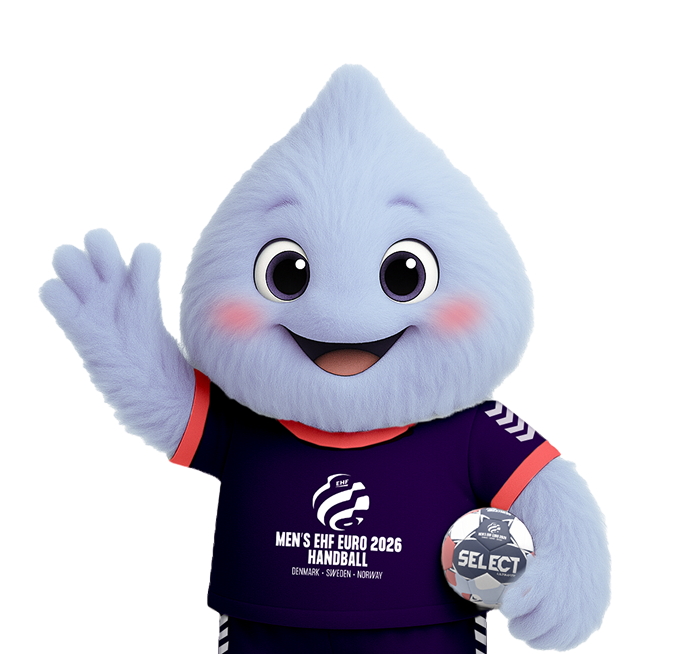
    Collaboration with Håll Sverige Rent, where their litter-eating mascot Pellis teamed up with our own Splash, who promotes water protection. Together for plastic-free oceans became a strong joint message in our activities.


  • 6

    Fan engagement

    6.1

    Splash and Pure Fact branding displayed on waste collection trucks in Kristianstad throughout January.


    6.3

    Clickable feature with Splash and “Pure Fact” on ticket confirmations and digital tickets.

    6.3

    8,800 people participated in the digital Pure Promise Water Quiz, presented by Grundfos.


    6.4

    We published a total of 31 posts across social media channels, reaching 444,985 people with messages about Pure Promise and our sustainability work.


  • 7

    Measurment

    7.1

    We measured the climate footprint for the first time in a Swedish handball championship using the “Event & Climate” tool developed by the University of Gothenburg.


    7.1

    We are part of a development project led by the University of Gothenburg, where our work with the championship’s climate measurement contributes to improving the “Event & Climate” tool.


    7.1

    We collaborated with Malmö University and engaged four students from the Sport Management program who collected data for the climate assessment.


    7.1

    The event’s total climate footprint amounted to 2,411 tonnes of CO2, as well as 32 kg CO2 per person and 2 kg CO2 emissions per person per day (calculated over 13 days, including 10 match days and 74,328 spectators).


    7.2

    In collaboration with Upplevelseinstitutet, we conducted a tourism economic analysis. The tourism-related revenue amounted to just over SEK 25 million in Kristianstad and just over SEK 86 million in Malmö.


Get in contact

The three host nations Denmark, Sweden and Norway, together
with the EHF, have decided to do something that helps each of
us contribute to a slightly more sustainable world. Our motto is:
“Not everyone can do everything – but everyone can do something”.
If you would like to get in touch with us, you can reach us here: